
Hind Ends
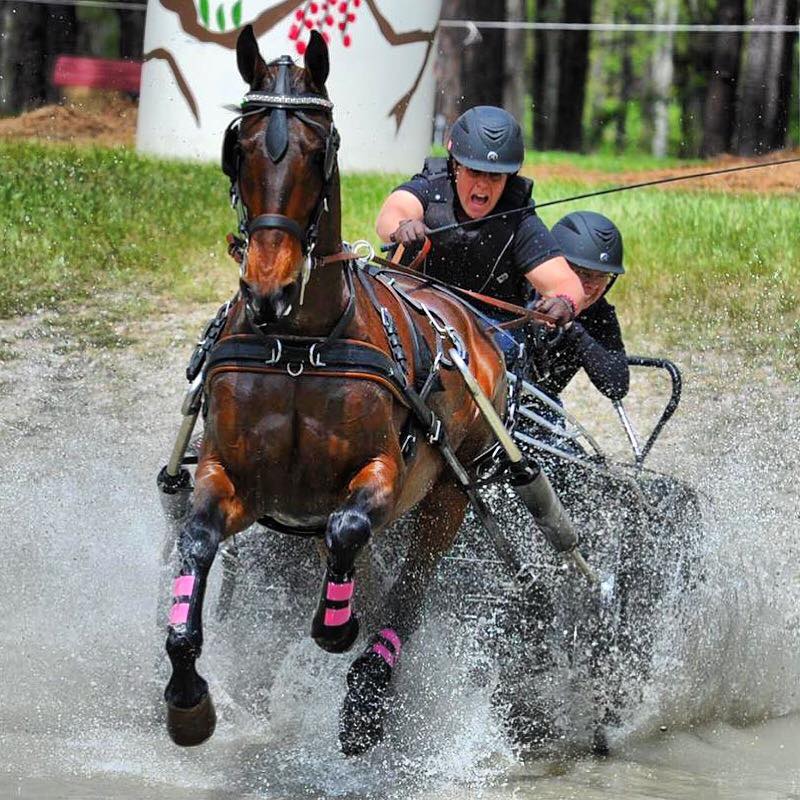
Building Power from Behind: Hind End Development, Nutrition, and Gut Health in the Driving Horse
One of the most overlooked aspects of conditioning a driving horse isn’t found in the harness or the carriage—it’s found in the hindquarters. Whether you’re training a recreational driving horse, a commercial carriage horse, or a Combined Driving Event athlete, true power comes from behind. A horse that is properly developed through the hind end will be stronger, more athletic, better balanced, and far less likely to suffer injuries than one that simply pulls with its shoulders and front legs.
But exercise alone isn’t enough. Strong muscles cannot be built without the proper nutrition, and proper nutrition cannot be utilized without a healthy digestive system. Training, feeding, and gut health all work together to create a horse capable of performing at its best.
Why the Hind End Matters
The hindquarters are the engine of the horse. Every stride begins with the engagement of the hind legs, driving the horse forward while supporting the weight carried over the back. In driving horses, this is especially important because they are not carrying a rider who can help influence balance through their seat.
Instead, the horse must learn to carry itself while simultaneously pushing the weight of a vehicle.
When a horse properly engages its hindquarters, you’ll notice:
Greater impulsion without increasing speed.
Better balance and self-carriage.
Easier transitions.
Improved collection.
More powerful hill work.
Reduced strain on the shoulders and front limbs.
Increased longevity in work.
Without adequate hind end strength, horses often compensate by pulling with their forehand. This creates excessive stress on the knees, shoulders, tendons, and feet while limiting athletic ability.
Developing the Hindquarters
Muscle is built through progressive, consistent work—not by simply logging miles.
Excellent exercises include:
Walking and trotting up gradual hills.
Frequent transitions between gaits.
Backing correctly while remaining straight.
Ground poles and raised cavaletti.
Collected work followed by forward movement.
Marathon conditioning with varied terrain.
Proper dressage training to encourage engagement.
Long, slow conditioning rides that build endurance without fatigue.
The key is asking the horse to push from behind rather than simply move faster.
You Can’t Build Muscle Without Proper Nutrition
Training creates the stimulus for muscle growth.
Nutrition provides the building blocks.
Without adequate calories, quality protein, amino acids, vitamins, and minerals, the horse simply cannot recover from exercise and build stronger muscle tissue.
Quality protein is especially important because muscle fibers are constantly being repaired after work.
Essential amino acids such as lysine, methionine, and threonine are particularly important for muscle development.
In addition, horses require:
Adequate digestible energy
Vitamin E
Selenium (where appropriate)
Magnesium
Balanced calcium and phosphorus
Trace minerals including zinc and copper
Trying to build muscle while feeding an imbalanced ration is like trying to build a barn without lumber.
Gut Health: The Missing Piece
Many owners focus on feed but forget the organ responsible for actually utilizing it—the digestive tract.
A healthy gut allows horses to efficiently digest fiber, absorb nutrients, and convert feed into usable energy.
If the digestive system is compromised, even the highest-quality feed may not provide the nutrients your horse needs.
Poor gut health may contribute to:
Difficulty maintaining muscle.
Weight loss.
Dull hair coat.
Poor topline.
Loose manure.
Reduced stamina.
Increased inflammation.
Slower recovery after work.
Maintaining gut health starts with plenty of forage, consistent feeding schedules, access to clean water, minimizing unnecessary stress, and providing a balanced diet. In some horses, veterinary-guided use of probiotics, prebiotics, or digestive support products may also be beneficial.
Recovery Is When Muscle Is Built
One of the biggest misconceptions is that muscles grow during exercise.
In reality, exercise creates tiny microscopic tears within muscle fibers. Those fibers rebuild stronger during recovery—provided the horse has enough rest and proper nutrition.
This means conditioning schedules should include:
Easy recovery days.
Proper hydration.
Quality forage.
Balanced concentrate when needed.
Adequate sleep and turnout.
Overworking a horse without allowing recovery often leads to fatigue rather than fitness.
Looking Beyond the Scale
A horse can maintain an ideal body weight yet still lack adequate muscle.
When evaluating condition, don’t focus solely on fat cover. Instead, assess:
Width across the hindquarters.
Definition through the gaskins.
Strength over the loin.
Development of the topline.
Overall balance from front to back.
True fitness is measured by strength, not simply body condition.

The Complete Athlete
Successful driving horses are not created by miles alone. They are developed through thoughtful conditioning, correct training, balanced nutrition, and excellent digestive health.
When horses learn to engage their hindquarters, receive the nutrients needed to repair muscle, and maintain a healthy gut capable of absorbing those nutrients, they become stronger, healthier, and more capable athletes.
At Tanglao Carriage Driving, we believe conditioning is about far more than pulling a carriage. It’s about creating horses that are physically balanced, mentally confident, and prepared for long, successful careers. Building the hind end is building the future of your driving horse—one correct stride at a time.


Comments