
Why Wait To Hitch
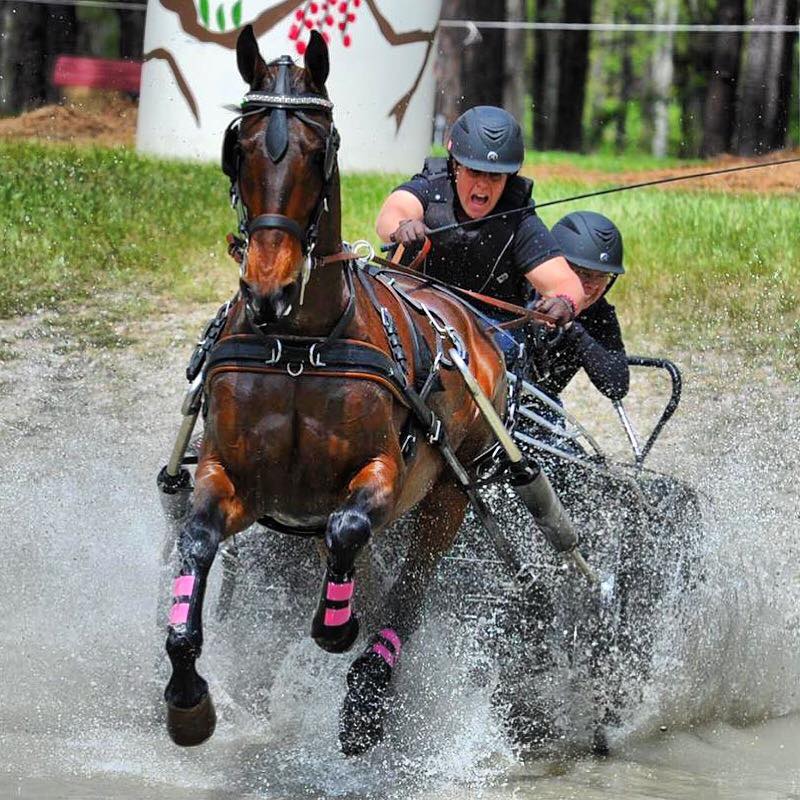
Why Foundation Training Matters Before a Horse Is Ever Hooked to a Carriage

One of the biggest mistakes people make when training a driving horse is rushing to hitch them to a vehicle before they have truly mastered the fundamentals. While it is exciting to see a young horse pull a cart for the first time, that first hitch should never be the beginning of the lesson—it should simply be the next logical step in a long, well-prepared training program.
A horse doesn’t know that a carriage can’t instantly move out of the way if he panics. Unlike a rider, who can quickly dismount or influence the horse with body weight, a carriage is attached. If a horse reacts with fear, confusion, or resistance, everyone involved is at greater risk. That’s why investing time in foundation work isn’t just good horsemanship—it’s essential for safety.
Build Confidence Before Adding Pressure
Every horse should understand the basics before ever feeling the weight of a vehicle behind them. Foundation driving teaches the horse how to respond calmly and confidently to the driver’s voice and rein aids without introducing the additional challenge of pulling a carriage.
Before hitching, your horse should be comfortable with:
* Wearing a full harness.
* Long-lining confidently in open and enclosed areas.
* Walking, halting, and backing from voice commands.
* Steering accurately from rein aids alone.
* Standing quietly for extended periods.
* Walking over different footing and around distractions.
* Having traces, straps, and shafts simulated around their body.
* Dragging light objects that make noise and create resistance.
Each lesson builds confidence rather than simply testing bravery.
The Importance of Voice Commands
When you’re behind a horse in a carriage, your voice becomes one of your most valuable tools. A horse should immediately understand commands such as “walk,” “trot,” “whoa,” “stand,” and “back” long before they are hitched.
These commands become especially important if something unexpected happens. A horse that has spent months learning to trust and respond to your voice is far more likely to stop and think instead of reacting with panic.
Teaching the Horse to Think
Foundation work isn’t just about obedience. It’s about teaching a horse how to process new situations.
Good training develops horses that pause and look to the driver for guidance instead of immediately choosing flight. Every calm exposure to new objects, sounds, environments, and sensations helps build emotional resilience that will serve the horse throughout its driving career.
Desensitization Is More Than “Bombproofing”
Many people focus on exposing horses to scary objects, but true desensitization goes much deeper.
A future driving horse should become comfortable with:
* Harness movement and noise.
* Breeching touching their hindquarters.
* Shafts alongside their body.
* Traces tightening and loosening.
* Objects dragging behind them.
* Uneven terrain.
* Traffic, bicycles, dogs, livestock, and crowds.
The goal isn’t to create a horse that ignores everything. The goal is to create a horse that stays calm, thinks through challenges, and trusts the driver.
Never Skip the “Stand”
Perhaps no command is more important than “stand.”
Many accidents occur because horses learn they can move before being asked. Standing quietly while being harnessed, adjusted, and eventually hitched should become second nature. The horse should remain relaxed until given permission to move.
A reliable stand is not taught after the first hitch—it should already be deeply ingrained before the carriage is ever attached.
The First Hitch Should Feel Familiar
When the day finally comes to hook your horse to a carriage, there should be very few surprises.
The horse should already recognize:
* The feel of the harness.
* Rein communication.
* Voice commands.
* Pressure against the breeching.
* Weight behind them.
* Noises following them.
* Working calmly between shafts or shaft simulators.
The carriage simply combines skills the horse already understands rather than introducing entirely new concepts all at once.
Patience Creates Safe Horses
Every horse learns at a different pace. Some are mentally ready after several months of consistent work, while others need considerably longer. Progress should always be measured by the horse’s confidence, not by a calendar.
Taking extra weeks—or even months—to establish a solid foundation is never wasted time. It creates horses that are happier, safer, and more dependable for years to come.
The most successful driving horses aren’t the ones that were hitched the fastest. They’re the ones that were prepared so thoroughly that their first hitch felt like just another day at school.
In carriage driving, there is no prize for being first to hook. The reward comes from producing a horse that trusts the process, trusts the driver, and enjoys the job for a lifetime.


Another awesome post!